



Blog
Across the United States, aging transportation infrastructure continues to challenge civil engineers and public agencies. Increased traffic volumes, heavier freight loads, and decades of wear have forced many bridges to operate under load restrictions, raising concerns about long-term structural integrity and public safety.
Traditionally, bridge inspections have relied on periodic, manual evaluations. While effective, these inspections provide only limited snapshots of a structure’s condition. Today, advances in bridge monitoring systems, structural health monitoring (SHM), and linear position sensors are enabling a shift toward real-time, data-driven infrastructure management.
At the forefront of this transformation is Alliance Sensors Group, whose LVIT (Linear Variable Inductive Transducer) technology is redefining how engineers monitor bridge movement, rail expansion, and structural performance.

Why Continuous Structural Health Monitoring Matters
Modern infrastructure is dynamic. Bridges expand, contract, flex, and shift in response to temperature changes, traffic loads, and environmental stressors. Relying solely on periodic inspections increases the risk of missing early warning signs of structural fatigue or failure.
By implementing real-time bridge monitoring systems, civil engineers can:
- Detect structural movement and displacement instantly
- Identify early-stage damage or stress accumulation
- Reduce reliance on costly manual inspections
- Extend infrastructure lifespan through predictive maintenance
- Improve public safety through proactive intervention
In many cases, the cost of installing a sensor-based monitoring system is quickly offset by reduced inspection costs and the prevention of major repairs or failures.
Real-Time Bridge Monitoring with LVIT Sensor Technology
Advanced monitoring platforms integrate linear position sensors into comprehensive infrastructure monitoring solutions.
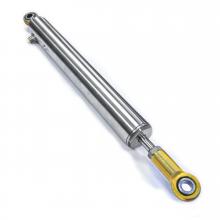
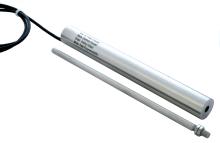
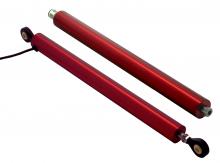
Alliance Sensors Group’s LV-45 series linear position sensors are key components in systems that continuously measure bridge displacement and transmit real-time data to remote monitoring centers.
Installed at critical points, such as bridge-to-pier interfaces…these sensors measure movement across multiple axes. Using rod-eye swivel ends, they accommodate installation misalignment while maintaining high-precision measurement accuracy.
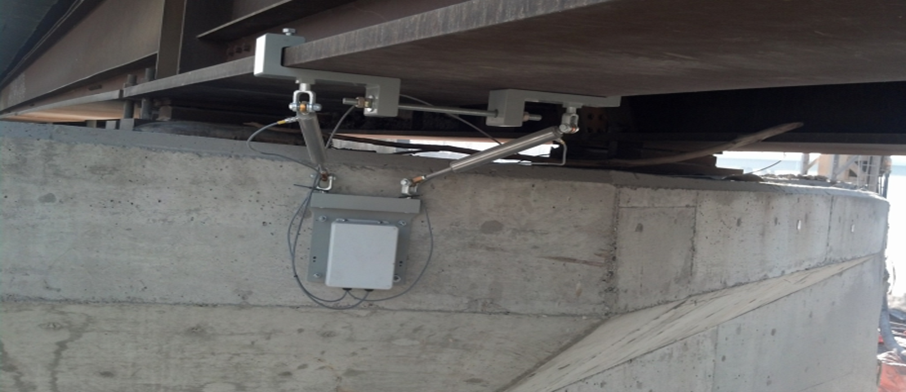
Key capabilities include:
- Real-time displacement monitoring
- Multi-axis structural movement tracking
- Seamless integration with data acquisition systems
- Analog outputs (0–10V or 4–20 mA) for easy connectivity
- Wireless data transmission compatibility
This continuous stream of data allows engineers to monitor trends, detect anomalies, and respond to structural changes before they become critical issues.
Engineered for Harsh Environmental Conditions
Bridge and rail monitoring systems must operate reliably in some of the harshest environments in North America, from freezing northern winters to extreme desert heat and high-humidity coastal regions.
LVIT sensors from Alliance Sensors Group are specifically engineered for these conditions:
- Operating temperature range: -40°C to +115°C (-40°F to 200°F)
- IEC IP67 rating for water and dust resistance
- High shock and vibration resistance
- Durable aluminum or stainless-steel housings
Their non-contact inductive sensing technology eliminates mechanical wear, ensuring long-term reliability and reducing maintenance requirements—critical for remote or hard-to-access infrastructure installations.
Solving Thermal Expansion and Rail Buckling Challenges
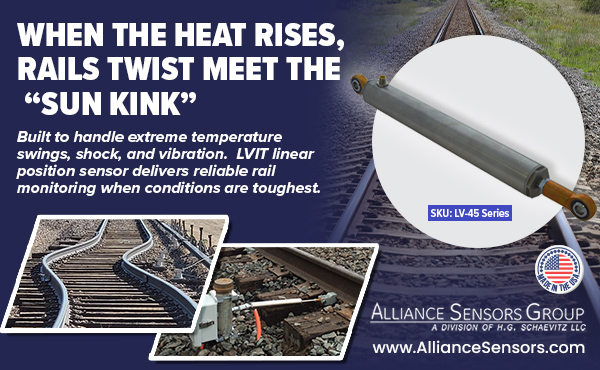
One of the most significant challenges in both bridge and railway engineering is thermal expansion. As temperatures fluctuate, steel structures expand and contract, placing stress on joints, supports, and rail systems.
In extreme cases, rail expansion can lead to track buckling, commonly known as a “sun kink,” which significantly increases the risk of derailment.
To mitigate this risk, engineers are increasingly deploying rail monitoring sensors and bridge expansion monitoring systems. LVIT sensors provide precise measurements of:
- Bridge expansion and contraction
- Rail displacement and alignment
- Structural stress and deformation
With this data, railway operators can detect dangerous conditions early, reroute trains if necessary, and perform targeted maintenance before failures occur.
Considering there are over 110,000 railroad bridges in North America, most still inspected visually, this shift toward automated infrastructure monitoring represents a major advancement in safety and efficiency.
Linear Position Sensor for Complex Infrastructure
Every infrastructure project presents unique mechanical and environmental challenges.
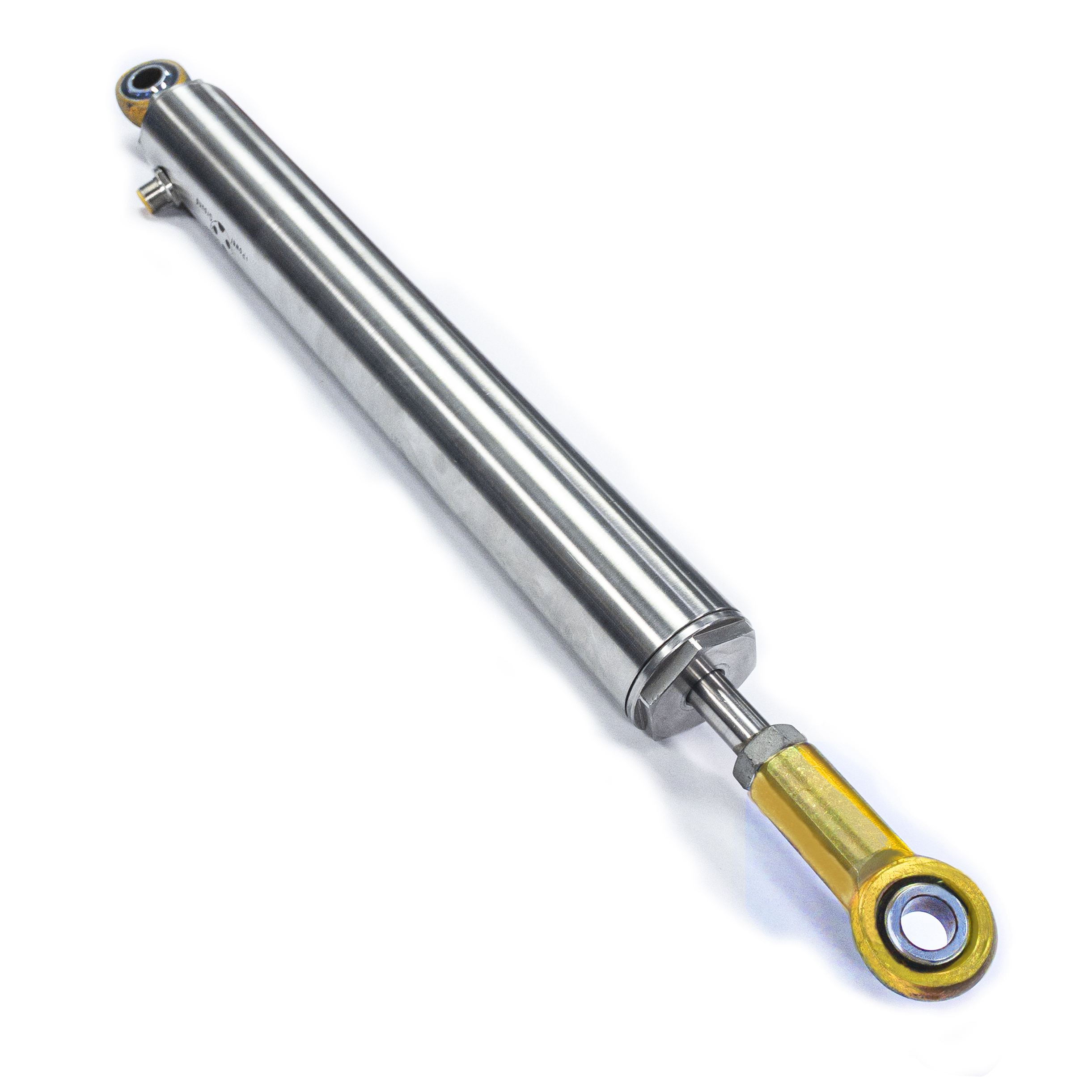
The LV-45 sensor offers:
- Multiple mounting configurations, including rod-eye ends
- Compatibility with hydraulic systems and structural assemblies
- Cable or connector electrical terminations
- Aluminum or stainless-steel housing options
These features allow seamless integration into:
- Bridge expansion joints
- Structural connection points
- Hydraulic actuators
- Rail monitoring systems
Ball joint swivel rod ends further enhance installation by compensating for misalignment, ensuring accurate measurements even in complex field conditions.
Precision Calibration for Accurate Data
Accurate data is the foundation of effective structural health monitoring systems. Even small measurement errors can lead to incorrect assessments of structural performance.
Alliance Sensors Group addresses this with SenSet™ field calibration technology, which allows sensors to be precisely calibrated after installation.
Benefits include:
- Improved measurement accuracy in real-world conditions
- Compensation for installation tolerances
- Maximized resolution across the full measurement range
- Reliable, repeatable data over time
In applications where millimeters matter, this level of precision ensures engineers can trust the data they rely on for critical decisions.
The Future of Smart Infrastructure Monitoring
As infrastructure continues to age, the demand for smart bridge monitoring, railway sensor systems, and predictive maintenance technologies will only increase.
By integrating linear position sensors into monitoring systems, engineers can transition from reactive maintenance to proactive asset management: reducing costs, improving safety, and extending infrastructure life.
Alliance Sensors Group LVIT sensors are playing a central role in this evolution, providing the rugged, accurate, and reliable measurement solutions needed for modern infrastructure challenges.
Need Assistance? Contact us TODAY!
An application engineer is available to help you find the perfect product for your application!
Related Blogs
What is a LVIT…
By Edward E. Herceg,
Chief Technology Officer,…