




LVIT - Position Sensors for Civil Engineering Applications
Linear Position Sensors Engineered for Structural Integrity and Long-Term Infrastructure Monitoring
Alliance Sensors Group LVIT linear position sensors are purpose-built for the demanding realities of civil engineering applications, where durability, stability, and measurement accuracy directly impact public safety and infrastructure longevity. Designed for heavily industrialized and harsh outdoor environments, LVIT sensors deliver precise, contactless position feedback in bridge expansion systems, rail track monitoring for buckling, structural health monitoring, wastewater treatment facilities, and roadway leveling systems. When infrastructure performance must be verified continuously and reliably, our sensors provide the rugged measurement backbone engineers depend on.
Reliable Performance in Extreme Outdoor Conditions
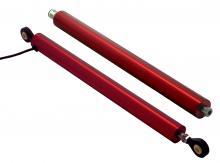
Civil engineering environments expose sensors to wide temperature swings, moisture, vibration, debris, and constant mechanical movement. The MR, ME, and LV Series LVIT sensors are engineered to operate reliably from -40°C to +115°C, with excellent shock and vibration resistance for long-term field deployment. With integrated electronics, these sensors simplify installation while delivering stable, drift-free output over years of service. Their non-contact inductive technology eliminates wear, extending service life and reducing maintenance requirements in hard-to-access installations.
Flexible Installation for Complex Structural Applications
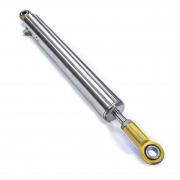
From bridge expansion joints to hydraulic gate actuators and structural movement monitoring, civil projects demand adaptable sensor solutions. ASG offers optional mounting hardware, including rod-eye ends and custom mechanical configurations, allowing seamless integration into cylinders, linkages, and structural assemblies. Whether embedded within hydraulic systems or mounted externally to monitor displacement, our LVIT sensors are designed to fit the mechanical realities of modern infrastructure projects without compromising performance or reliability.
Precision Calibration and Long-Term Measurement Confidence
Every LVIT sensor features SenSet™ field calibration technology, allowing precise adjustment after installation to match the exact stroke of the cylinder or movement range being monitored. This capability ensures optimal accuracy in real-world conditions, compensating for installation tolerances and maximizing measurement resolution. In civil engineering applications where millimeters can signal structural stress, rail deformation, or expansion movement, Alliance Sensors Group LVIT sensors provide dependable, repeatable data that supports proactive maintenance strategies, structural integrity analysis, and long-term infrastructure reliability.
Need help selecting the right sensor for your application?
Speak directly with an experienced application engineer at H. G. Schaevitz Alliance Sensors Group by calling 856-727-0250 or contact us by clicking here.
Frequently Asked Questions About LVIT Position Sensors for Civil Engineering
What is an LVIT position sensor?
An LVIT (Linear Variable Inductive Transducer) position sensor is a non-contact linear displacement sensor used to measure the position or movement of mechanical components. LVIT sensors use inductive technology to provide accurate, repeatable position feedback without the mechanical wear associated with contact-based sensing technologies.
Alliance Sensors Group LVIT position sensors are designed for industrial, outdoor, and infrastructure applications where reliable linear position measurement is required over long operating periods.
What are linear position sensors used for in civil engineering?
Linear position sensors are used in civil engineering to measure displacement, movement, expansion, contraction, and actuator position in infrastructure and structural systems. Applications can include bridge expansion monitoring, structural health monitoring, rail track movement and buckling detection, roadway leveling, hydraulic gates, and wastewater treatment equipment.
By continuously measuring linear movement, position sensors can provide data that helps engineers monitor infrastructure performance and identify changes that may require inspection or maintenance.
Can LVIT sensors be used for structural health monitoring?
Yes. LVIT position sensors can be incorporated into structural health monitoring systems to measure linear displacement and movement.
They can be used where engineers need to monitor changes in structural components or mechanical systems over time. Applications may include bridge movement, expansion systems, structural displacement, hydraulic actuators, and other infrastructure components where accurate position feedback is required.
Can LVIT sensors be used for bridge expansion joint monitoring?
Yes. LVIT sensors are well suited for measuring linear movement associated with bridge expansion systems and other mechanisms that accommodate thermal and structural movement.
A properly selected LVIT sensor can continuously monitor displacement while providing non-contact operation and long-term measurement stability. Sensor stroke, mounting configuration, environmental exposure, and required measurement performance should be considered when designing a bridge monitoring system.
How do you measure bridge expansion and contraction?
Bridge expansion and contraction can be measured by monitoring the linear displacement of an expansion system or other structural component as environmental and loading conditions change.
An LVIT linear position sensor can be mechanically installed across the movement being monitored and provide an electrical signal corresponding to the measured position. This allows displacement data to be collected by a monitoring or data acquisition system for analysis over time.
Can LVIT sensors be used for rail track buckling detection (sun kink)?
LVIT sensors can be used in rail monitoring systems to measure linear displacement associated with rail movement and deformation.
Monitoring changes in rail position can provide engineers with valuable displacement data for evaluating track behavior and identifying conditions that may warrant additional inspection or engineering analysis. Sensor selection should account for the expected displacement range, environmental conditions, mechanical installation, and required measurement resolution.
What type of sensor is best for measuring linear displacement outdoors?
The appropriate linear displacement sensor depends on the environmental and mechanical requirements of the application. For demanding outdoor applications, a non-contact inductive sensor such as an LVIT can provide advantages including resistance to mechanical wear, reliable operation across a wide temperature range, and suitability for applications involving vibration and continuous movement.
Alliance Sensors Group MR, ME, and LV Series LVIT sensors are designed for demanding industrial and outdoor environments and can operate from approximately -40°C to +105°C.
Are LVIT position sensors suitable for harsh outdoor environments?
Yes. Alliance Sensors Group LVIT sensors are designed for harsh industrial and outdoor operating conditions where temperature variation, vibration, shock, moisture, debris, and continuous mechanical movement may be present.
The MR, ME, and LV Series are designed to operate from approximately -40°C to +105°C. The appropriate sensor model and configuration should be selected according to the specific environmental conditions of the installation.
How do LVIT sensors work?
LVIT sensors use non-contact inductive sensing technology to determine the position of a moving element within the sensor. Because the measurement principle does not depend on a sliding electrical contact, there is no contact element that must continually wear against the moving component.
This non-contact design supports long operating life and reliable position measurement in applications where continuous mechanical movement is expected.
What are the advantages of non-contact linear position sensors?
Non-contact linear position sensors can provide several advantages in long-term industrial and infrastructure applications:
- Reduced mechanical wear due to rapid cycling or dithering
- Long operating life
- Repeatable position measurement
- Low maintenance requirements
- Suitability for continuous movement
- Resistance to vibration and mechanical shock
- Flexible integration into mechanical systems
These characteristics can make LVIT technology particularly useful for infrastructure installations where sensor replacement or maintenance may be difficult.
Can LVIT sensors measure hydraulic cylinder position?
Yes. LVIT sensors can be used to measure the linear position of hydraulic cylinders and actuators.
This makes them useful in civil engineering equipment such as hydraulic gates, roadway leveling systems, bridge mechanisms, and other infrastructure systems that rely on hydraulic actuation. Depending on the application, sensors can be integrated with the cylinder either port mounted or embedded or installed externally using an appropriate mechanical linkage.
How do you monitor hydraulic cylinder position?
Hydraulic cylinder position can be monitored by installing a linear position sensor that measures the extension or retraction of the cylinder.
An LVIT sensor can provide continuous position feedback corresponding to cylinder movement. Optional mounting hardware, including rod-eye ends and other mechanical configurations, can help integrate the sensor into hydraulic cylinders, linkages, and structural assemblies.
Can LVIT sensors be used for roadway leveling systems?
Yes. LVIT linear position sensors can be used in roadway leveling and positioning systems to monitor the movement of hydraulic cylinders, actuators, or mechanical components.
Accurate position feedback can help control and monitor leveling equipment, while the sensor's non-contact design can reduce wear in applications involving frequent movement.
Can LVIT sensors be used in wastewater treatment facilities?
Yes. LVIT sensors can be incorporated into wastewater treatment equipment where reliable linear position or displacement measurement is required.
Potential applications include hydraulic gates, actuators, positioning mechanisms, and other equipment requiring continuous linear position feedback. Environmental conditions should be reviewed carefully when selecting the appropriate sensor configuration for a wastewater installation.
What is SenSet™ field calibration?
SenSet™ is Alliance Sensors Group's field calibration technology for adjusting an LVIT sensor after installation.
Field calibration allows the sensor output to be matched to the actual mechanical stroke or movement range of the installed application. This can help compensate for installation tolerances and maximize the usable measurement range of the sensor.
Why is field calibration important for structural monitoring?
Field calibration can be particularly useful when a sensor is installed on large structures, hydraulic systems, cylinders, or mechanical linkages where the actual movement range may differ from the original design dimensions.
SenSet™ allows the sensor to be adjusted after installation, helping engineers obtain the desired output over the actual movement being monitored.
How long do LVIT position sensors last?
The service life of an LVIT sensor depends on the specific model, operating environment, installation, and application. Because LVIT technology is non-contact, it eliminates the wear associated with sliding electrical contacts.
This can make LVIT sensors well suited to long-term infrastructure monitoring applications where reliable operation and reduced maintenance are important.
Do LVIT sensors require maintenance?
LVIT sensors generally require less maintenance associated with mechanical wear because their sensing technology is non-contact.
However, the overall installation should still be inspected according to the requirements of the infrastructure system. Mounting hardware, mechanical alignment, wiring, connectors, and surrounding equipment can all affect long-term system performance.
Can LVIT sensors withstand vibration and shock?
Yes. Alliance Sensors Group LVIT sensors are designed for industrial environments and provide resistance to shock and vibration.
This makes them suitable for applications involving transportation infrastructure, hydraulic equipment, moving machinery, and other systems where mechanical vibration or shock may occur.
What should I consider when selecting an LVIT linear position sensor?
Important factors include:
- Required measurement stroke
- Expected range of mechanical movement
- Required accuracy and resolution
- Operating temperature
- Shock and vibration exposure
- Moisture and environmental conditions
- Available installation space
- Mounting configuration
- Electrical output requirements
- Hydraulic cylinder or actuator dimensions
- Data acquisition or control system requirements
Selecting the sensor based on the complete mechanical and environmental requirements helps ensure reliable long-term performance.
What LVIT sensor series are available for civil engineering applications?
Alliance Sensors Group offers several LVIT sensor series suitable for industrial and infrastructure applications, including the LR, LZ, and LV Series.
The appropriate series depends on the required stroke, mechanical configuration, environmental conditions, electrical requirements, and installation method. Application-specific engineering assistance is available when the requirements are complex.
Can LVIT sensors be customized for civil engineering applications?
Alliance Sensors Group offers mounting hardware and mechanical configurations that allow LVIT sensors to be integrated into a variety of cylinders, linkages, actuators, and structural assemblies.
For applications with unusual mechanical or environmental requirements, engineers should discuss the application directly with Alliance Sensors Group to determine the appropriate sensor and configuration.
How accurate are LVIT linear position sensors?
LVIT sensor accuracy depends on the specific sensor model, measurement range, operating conditions, installation, and electrical configuration.
The non-contact inductive sensing principle provides repeatable linear position measurement, while SenSet™ field calibration can help optimize the sensor for the actual installed movement range.
For applications where displacement measurements are critical to structural analysis or equipment control, engineers should review the specifications for the specific sensor being considered.
How can position sensors support infrastructure monitoring?
Position sensors provide measurement data that can be used to monitor movement and displacement over time. In infrastructure applications, this information can support structural health assessment, equipment monitoring, trend analysis, and preventative maintenance programs.
For example, monitoring bridge movement, rail displacement, hydraulic actuator position, or roadway leveling equipment can provide engineers with data that helps identify changes from expected operating conditions.
Why choose Alliance Sensors Group for civil engineering position measurement?
Alliance Sensors Group LVIT position sensors are engineered for demanding applications where reliable linear displacement measurement is critical. Their non-contact inductive technology, wide operating temperature capability, resistance to shock and vibration, flexible mounting options, and SenSet™ field calibration provide engineers with a durable solution for infrastructure monitoring and control.
How do I choose the right LVIT sensor for my application?
The best LVIT sensor depends on the required stroke, mechanical installation, environmental conditions, electrical interface, and measurement requirements of the application.
For help selecting a sensor for bridge monitoring, structural health monitoring, rail applications, hydraulic cylinders, roadway leveling, wastewater equipment, or another civil engineering application, speak directly with an experienced application engineer at H. G. Schaevitz Alliance Sensors Group.
Call 856-727-0250 or contact Alliance Sensors Group to discuss your application and sensor requirements.