




Mobile Hydraulic Linear Position Feedback Sensors
Mobile Hydraulic Position Sensors for Extreme Duty Equipment
Alliance Sensors Group delivers rugged LVIT linear position sensors engineered specifically for mobile hydraulics and off-highway equipment. Using contactless inductive technology, ASG LVIT sensors withstand the severe shock, vibration, temperature swings, dirt, and humidity common in construction, mining, agriculture, forestry, and material handling machinery. From dump trucks and backhoes to forklifts and rail cars, our position sensors provide precise, repeatable position feedback that keeps equipment operating efficiently in the toughest field conditions.
In-Cylinder LVIT Sensors for Hydraulic Cylinder Position Feedback
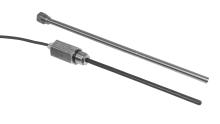
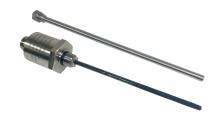
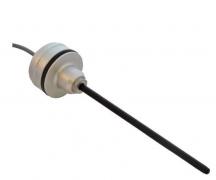
ASG’s in-cylinder LVIT products, including the MR (port-mount), MHP, and ME (embedded) Series, are purpose-built for direct installation inside hydraulic cylinders. Designed as replacements for magnetostrictive sensors, these inductive position sensors require no magnets and deliver superior resistance to shock and vibration. Ideal for boom position sensing, steering cylinders, suspension systems, and lift mechanisms, ASG in-cylinder LVIT sensors provide stable, drift-free output while reducing downtime and maintenance in demanding mobile hydraulic applications.
LV-45 Series LVIT Sensors for Harsh Industrial and Mobile Environments
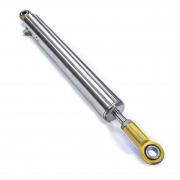
The LV-45 Series LVIT (Linear Variable Inductance Transducer) position sensors are specifically targeted for rugged measuring applications requiring durable, high-performance devices. Engineered to measure hydraulic cylinder position in extreme duty environments such as mining equipment, railroad systems, paper mills, shipboard systems, and power generation applications, the LV-45 delivers long-term stability and reliable signal output. Its integrated electronics and robust mechanical construction ensure consistent performance even under continuous heavy load cycles and high vibration levels.
Shock-Resistant, Magnet-Free Technology for Long-Term Mobile Reliability
Unlike magnetostrictive technologies, ASG LVIT mobile hydraulic sensors use fully contactless inductive measurement, eliminating wear components and magnet dependency. This design provides enhanced shock tolerance, improved reliability, and longer service life in high-impact environments. By delivering accurate linear position feedback in hydraulic cylinders exposed to constant movement and harsh outdoor conditions, Alliance Sensors Group enables OEMs and equipment manufacturers to build smarter, more durable mobile hydraulic systems that perform reliably in the field.
Need help selecting the right sensor for your application?
Speak directly with an experienced application engineer at H. G. Schaevitz Alliance Sensors Group by calling 856-727-0250 or contact us by clicking here.
Frequently Asked Questions About Linear Position Sensors for Mobile Hydraulics
What is a mobile hydraulic position sensor?
A mobile hydraulic position sensor measures the position or movement of hydraulic cylinders and actuators used in mobile and off-highway equipment.
Linear position sensors provide feedback that can be used to monitor or control components such as booms, steering cylinders, suspension systems, lifting mechanisms, and other hydraulic functions. Alliance Sensors Group LVIT sensors use non-contact inductive technology to provide repeatable position feedback in demanding mobile hydraulic environments.
What are hydraulic position sensors used for?
Hydraulic position sensors are used to measure the extension, retraction, or position of hydraulic cylinders and actuators.
Common applications include:
- Construction equipment
- Mining machinery
- Agricultural equipment
- Forestry equipment
- Material handling equipment
- Dump trucks
- Backhoes and excavators
- Forklifts
- Rail cars and railroad equipment
- Hydraulic booms
- Steering systems
- Suspension systems
- Lift mechanisms
Position feedback allows equipment manufacturers and control-system designers to monitor hydraulic movement and improve equipment control, productivity, and operating efficiency.
What is an in-cylinder position sensor?
An in-cylinder position sensor is a linear position sensor installed directly inside a hydraulic cylinder (either port mounted or embedded) to measure the position of the cylinder's moving element.
In-cylinder sensing provides direct hydraulic cylinder position feedback without requiring an external linkage or measurement mechanism. Alliance Sensors Group offers in-cylinder LVIT sensors designed for applications where the sensor must withstand the shock, vibration, and environmental conditions associated with mobile hydraulic equipment.
How does an in-cylinder LVIT position sensor work?
An in-cylinder LVIT sensor uses non-contact inductive technology to measure linear movement inside a hydraulic cylinder.
Unlike technologies that depend on a magnet or sliding electrical contact, an LVIT sensor uses inductive measurement without requiring a magnet attached to the moving component. This contactless design helps reduce wear and provides reliable position feedback in hydraulic cylinders subjected to repeated movement, shock, and vibration.
What is an LVIT position sensor?
LVIT stands for Linear Variable Inductance Transducer. An LVIT position sensor is a non-contact linear displacement sensor that uses inductive technology to measure the position of a moving component.
LVIT sensors are particularly useful for industrial and mobile hydraulic applications because they do not rely on mechanical sliding contacts and can be engineered for environments involving high vibration, shock, temperature variation, dirt, and humidity.
Why use an LVIT sensor for mobile hydraulics?
Mobile hydraulic equipment operates in environments that can expose sensors to significant mechanical and environmental stress. LVIT technology offers several advantages for these applications:
- Non-contact measurement
- No sliding electrical contacts
- No magnet required for sensing
- High resistance to shock and vibration
- Repeatable linear position measurement
- Long operating life
- Reduced wear-related maintenance
- Suitability for hydraulic cylinder installation
These characteristics make LVIT sensors a useful position feedback solution for construction, mining, agricultural, forestry, railroad, and other off-highway equipment.
Are LVIT sensors suitable for construction equipment?
Yes. LVIT linear position sensors can be used in a variety of construction equipment applications where hydraulic cylinder position feedback is required.
Potential applications include excavators, backhoes, loaders, dump trucks, lifting equipment, booms, steering systems, and other hydraulically actuated machinery. Their resistance to shock and vibration makes them suitable for equipment that operates under demanding field conditions.
Can LVIT sensors be used in mining equipment?
Yes. LVIT sensors can be used for hydraulic cylinder and actuator position measurement in mining equipment.
Mining machinery can experience high levels of shock, vibration, dirt, temperature variation, and continuous mechanical loading. A rugged, contactless position sensor can provide reliable hydraulic position feedback while minimizing wear-related concerns.
Can LVIT sensors be used in agricultural equipment?
Yes. LVIT position sensors can be incorporated into agricultural equipment where accurate hydraulic position feedback is required.
Applications may include hydraulic implements, lifting mechanisms, steering systems, suspension components, and other equipment that depends on hydraulic actuation. The appropriate sensor configuration should be selected based on the equipment's mechanical stroke, environmental exposure, and electrical requirements.
Can LVIT sensors be used in forestry equipment?
Yes. Forestry machinery presents demanding operating conditions involving shock, vibration, dirt, moisture, temperature changes, and repeated hydraulic movement.
LVIT sensors can provide linear position feedback for hydraulic cylinders used in booms, lifting systems, steering mechanisms, and other forestry equipment applications.
Can LVIT sensors be used in forklifts?
Yes. LVIT sensors can be used to measure hydraulic cylinder position in material handling equipment such as forklifts.
Applications can include lift mechanisms and other hydraulic functions where accurate, repeatable position feedback is needed. Sensor selection should take into account the required measurement stroke, installation geometry, operating environment, and electrical interface.
Can LVIT sensors be used in dump trucks and backhoes?
Yes. Dump trucks, backhoes, and similar construction equipment can use linear position sensors to monitor hydraulic cylinder movement.
An LVIT sensor can provide position feedback for lifting, dumping, boom, steering, and other hydraulic functions. Its non-contact design can be advantageous in equipment exposed to repeated shock, vibration, dirt, and outdoor environmental conditions.
What makes a position sensor suitable for off-highway equipment?
A position sensor used in off-highway equipment must be capable of operating reliably despite demanding mechanical and environmental conditions.
Important characteristics can include:
- High shock and vibration resistance
- Protection from dirt and humidity
- Wide operating temperature capability
- Resistance to mechanical wear
- Stable signal output
- Long service life
- Compact or application-specific mounting
- Compatibility with hydraulic cylinders and actuators
LVIT technology addresses many of these requirements through non-contact inductive measurement.
Are LVIT sensors resistant to shock and vibration?
Yes. Resistance to shock and vibration is an important characteristic of Alliance Sensors Group LVIT sensors intended for mobile hydraulic and heavy-duty applications.
Their contactless measurement design eliminates mechanical sliding contacts that could be subject to wear or damage during repeated high-impact operation.
Why are magnet-free position sensors useful for hydraulic cylinders?
Magnet-free position sensing eliminates the need for a magnet associated with the sensing system. This can simplify the sensing principle and avoid magnet-related considerations in applications exposed to high shock and vibration.
Alliance Sensors Group LVIT sensors use contactless inductive technology rather than magnetostrictive sensing, providing hydraulic cylinder position feedback without requiring magnets.
Are LVIT sensors an alternative to magnetostrictive sensors?
LVIT sensors can be used as an alternative to magnetostrictive position sensors in many hydraulic cylinder applications.
ASG's MR, MHP, and ME Series in-cylinder LVIT sensors are designed for direct installation inside hydraulic cylinders and are specifically suited to applications where a magnetostrictive sensor alternative is being considered.
The best technology depends on the cylinder design, required stroke, operating conditions, electrical interface, and performance requirements.
What is the difference between LVIT and magnetostrictive position sensors?
Both LVIT and magnetostrictive technologies can be used to measure linear position, but they use different sensing principles.
LVIT sensors use non-contact inductive measurement, while magnetostrictive sensors use a magnetic field and magnetostrictive sensing element. LVIT technology does not require a magnet and eliminates the need for a sliding electrical contact.
For mobile hydraulic equipment exposed to severe shock and vibration, these characteristics can make LVIT technology an attractive alternative.
What is the MR Series LVIT sensor?
The MR Series is an in-cylinder LVIT position sensor designed for hydraulic cylinder applications. The MR Series uses a port-mount configuration, allowing the sensor to be integrated directly into a hydraulic cylinder.
It is intended for applications requiring reliable hydraulic cylinder position feedback in demanding industrial and mobile environments.
What is the MHP Series LVIT sensor?
The MHP Series is an in-cylinder LVIT position sensing solution designed for hydraulic applications requiring direct cylinder position measurement.
Like other ASG in-cylinder LVIT products, the MHP Series uses contactless inductive technology and is intended for demanding applications where resistance to shock, vibration, and repeated movement is important.
What is the ME Series LVIT sensor?
The ME Series is an embedded in-cylinder LVIT position sensor designed for direct integration into hydraulic cylinders.
Its embedded configuration can provide a practical solution for hydraulic cylinder manufacturers and OEMs that require internal linear position feedback while maintaining a rugged mechanical design.
What is the LV-45 Series LVIT sensor?
The LV-45 Series is a rugged LVIT linear position sensor designed for demanding industrial and mobile applications.
The LV-45 is used for hydraulic cylinder position measurement and other harsh-duty applications, including mining equipment, railroad systems, paper mills, shipboard systems, and power generation equipment.
Its integrated electronics and robust mechanical construction are designed to provide stable signal output during continuous heavy-load cycles and high-vibration operation.
What applications are suitable for the LV-45 Series?
The LV-45 Series can be used in rugged applications requiring reliable linear position measurement. Potential applications include:
- Mining equipment
- Railroad and rail systems
- Hydraulic machinery
- Paper mill equipment
- Shipboard systems
- Power generation equipment
- Heavy industrial machinery
- Mobile hydraulic equipment
The appropriate configuration depends on the required stroke, installation, environmental conditions, and electrical requirements.
Can LVIT sensors measure hydraulic boom position?
Yes. LVIT sensors can be used to measure hydraulic cylinder movement associated with equipment booms.
Boom position feedback can be used in construction, forestry, material handling, and other mobile equipment applications. The sensor should be selected and installed so that its measurement range corresponds appropriately to the required hydraulic movement.
Can LVIT sensors measure steering cylinder position?
Yes. LVIT sensors can provide linear position feedback from hydraulic steering cylinders.
This can allow an equipment control system to monitor cylinder movement and, depending on the system design, use position information for steering control, operator feedback, automation, or machine monitoring.
Can LVIT sensors be used for suspension position measurement?
Yes. LVIT sensors can be used to measure linear movement associated with hydraulic suspension systems.
Their non-contact design and resistance to shock and vibration make them suitable for applications where the sensor may experience repeated mechanical movement and severe operating conditions.
Can LVIT sensors be used for lift mechanism position feedback?
Yes. LVIT sensors can measure the linear movement of hydraulic cylinders used in lifting mechanisms.
Potential applications include forklifts, construction equipment, material handling machinery, and other mobile hydraulic systems where accurate lift position feedback is required.
Do mobile hydraulic LVIT sensors require maintenance?
Because LVIT sensors use non-contact inductive measurement, they do not have the sliding electrical contacts found in many contact-based sensing technologies.
Eliminating these wear components can reduce sensor maintenance requirements and support longer service life. The complete hydraulic installation should still be inspected according to the equipment manufacturer's maintenance procedures.
How reliable are LVIT sensors in mobile hydraulic applications?
LVIT sensors are designed for applications where repeated movement, shock, vibration, and harsh environmental conditions can challenge conventional sensing technologies.
Their non-contact inductive design eliminates wear components associated with contact-based measurement and provides stable, repeatable linear position feedback for demanding hydraulic applications.
What should I consider when selecting a hydraulic cylinder position sensor?
Key considerations include:
- Hydraulic cylinder stroke
- Required measurement range
- Installation method
- Available space inside the cylinder
- Operating temperature
- Shock and vibration
- Dirt and humidity exposure
- Hydraulic fluid compatibility
- Required accuracy and resolution
- Electrical output
- Connector and cable requirements
- Control system interface
- Expected duty cycle
- Equipment service requirements
For OEM applications, the cylinder design and sensor integration should also be considered early in the equipment development process.
What type of position sensor is best for mobile hydraulic equipment?
There is no single position sensor that is best for every mobile hydraulic application. The correct technology depends on the hydraulic cylinder design, stroke, environmental conditions, required accuracy, electrical interface, and installation requirements.
For applications exposed to severe shock and vibration, a non-contact LVIT sensor can offer significant advantages because it eliminates mechanical contact and magnet dependency while providing reliable linear position feedback.
Can LVIT sensors be integrated into new hydraulic cylinder designs?
Yes. In-cylinder LVIT sensors can be designed into hydraulic cylinders during the OEM development process.
Early integration allows engineers to account for sensor mounting, available internal space, stroke, electrical connections, hydraulic environment, and system requirements. This can help create a more compact and robust hydraulic position sensing solution.
Can LVIT sensors be retrofitted to existing hydraulic cylinders?
Depending on the cylinder design, an LVIT sensor may be suitable for retrofitting an existing hydraulic cylinder.
The feasibility of a retrofit depends on factors such as available mounting provisions, internal dimensions, stroke, port configuration, and electrical requirements. Alliance Sensors Group application engineers can evaluate the cylinder design and help determine an appropriate configuration.
How do I select the right LVIT sensor for mobile hydraulics?
Start by identifying the hydraulic cylinder's required measurement stroke, mounting arrangement, operating environment, and electrical interface.
For an in-cylinder application, determine whether a port-mounted, embedded, or other configuration is appropriate. For particularly harsh mobile or industrial environments, consider the expected shock, vibration, temperature, dirt, humidity, and duty cycle.
Alliance Sensors Group can help OEMs and equipment manufacturers select an LVIT sensor based on the complete application requirements.
Can Alliance Sensors Group help with hydraulic position sensor selection?
Yes. Alliance Sensors Group application engineers can help OEMs, hydraulic cylinder manufacturers, and equipment designers evaluate position sensing requirements for mobile hydraulics and off-highway equipment.
For help selecting an LVIT sensor for a hydraulic cylinder, boom, steering system, suspension, lift mechanism, or other mobile hydraulic application, call 856-727-0250 or contact Alliance Sensors Group directly.