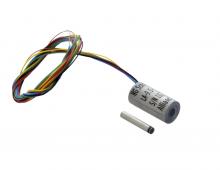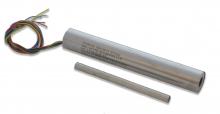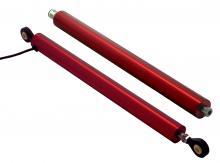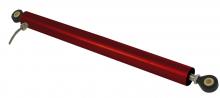





Aerospace / Military
Rugged LVIT and LVDT Position Sensors for Aerospace and Defense Application
The aerospace and defense industries demand rugged, high-reliability linear position sensors capable of performing flawlessly in mission-critical environments. Alliance Sensors Group LVIT and LVDT linear position sensors are engineered to withstand extreme temperature fluctuations, intense shock and vibration, and continuous-duty operation in demanding aerospace and military applications.
High-Accuracy Feedback for Mission-Critical Control Systems
Our LVIT linear position sensors provide stable, drift-free output with exceptional linearity and repeatability, supporting tight tolerance control requirements across aerospace and military platforms. Designed for integration into both new system designs and retrofit programs, our sensors enhance system responsiveness, improve reliability, and support advanced control architectures in defense technologies.
Engineered for Harsh Environments and Custom Integration
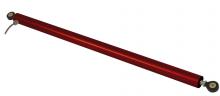
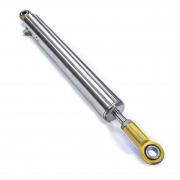
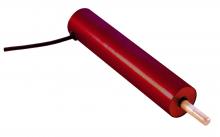
With over 40 years of combined experience, our application engineers work directly with aerospace and defense designers to develop sensing solutions using LVIT technologies. Our expertise in harsh-environment sensor design allows us to tailor mechanical packaging, electrical interfaces, output signals, and mounting configurations to meet stringent military and aerospace specifications. Whether embedded within hydraulic cylinders or integrated into compact actuator assemblies, ASG sensors are built to meet the mechanical and environmental demands of your applications.
When precision, durability, and mission readiness are critical, aerospace and defense professionals trust ASG LVIT products to deliver uncompromising performance and reliability in the most demanding applications.
Need help selecting the right sensor for your application?
Speak directly with an experienced application engineer at H. G. Schaevitz Alliance Sensors Group by calling 856-727-0250 or contact us by clicking here.
Aerospace & Military Position Sensor FAQs
What are aerospace position sensors?
Aerospace position sensors are linear position measurement devices used to monitor the movement and position of components in aircraft, aerospace systems, defense equipment, and other mission-critical applications. Alliance Sensors Group (ASG) manufactures rugged LVIT and LVDT linear position sensors designed for applications requiring accurate, repeatable position feedback in demanding environments.
What are LVIT position sensors used for in aerospace and defense?
LVIT linear position sensors are used to provide precise linear position feedback for aerospace and defense equipment, including actuators, hydraulic cylinders, flight-control systems, landing gear, valves, engine control systems, and other electromechanical or hydraulic systems. LVIT technology provides stable, repeatable position measurement for control and monitoring applications.
What are LVDT position sensors used for in aerospace and military applications?
LVDT position sensors are used for high-precision linear position measurement in aerospace, military, and industrial systems. Common applications include actuator feedback, hydraulic cylinder position measurement, control systems, test equipment, valve position monitoring, and other applications where reliable linear displacement measurement is required.
Why are LVIT and LVDT sensors used in aerospace applications?
Aerospace applications require position sensors that can provide accurate and repeatable feedback while operating under demanding environmental conditions. LVIT and LVDT sensors can be engineered for applications involving temperature extremes, shock, vibration, continuous operation, and limited installation space.
Can aerospace position sensors withstand shock and vibration?
Yes. Aerospace and military position sensors may need to withstand substantial shock and vibration. ASG designs rugged LVIT and LVDT sensors for demanding environments, with mechanical construction, mounting configurations, and materials selected according to the application's requirements.
Can LVIT sensors operate at high and low temperatures?
Yes. LVIT sensors can be designed for applications with demanding operating temperature requirements. The appropriate sensor configuration depends on the required temperature range, installation environment, stroke length, electrical interface, and other application specifications.
Can ASG position sensors be used inside hydraulic cylinders?
Yes. ASG linear position sensors can be integrated into hydraulic cylinders to provide direct measurement of piston or rod position. Hydraulic cylinder position sensing is commonly used for control, monitoring, automation, and feedback applications where accurate linear displacement measurement is required.
Can ASG sensors be integrated into aerospace actuators?
Yes. LVIT and LVDT linear position sensors can be integrated into hydraulic and electromechanical actuator assemblies. ASG can provide application-specific mechanical configurations, mounting arrangements, electrical interfaces, and output options to accommodate actuator design requirements.
Can aerospace position sensors be customized?
Yes. Alliance Sensors Group provides custom linear position sensor solutions for applications with specialized mechanical, electrical, or environmental requirements. Customization may include sensor length, stroke, mounting configuration, mechanical packaging, electrical connections, output characteristics, and other application-specific requirements.
What is the difference between an LVIT and an LVDT position sensor?
LVIT and LVDT sensors both measure linear position but use different sensing technologies and electrical interfaces. An LVDT uses a transformer-based inductive design, while an LVIT uses inductive sensing technology with an electronic output. The appropriate technology depends on the application's control electronics, environmental requirements, mechanical configuration, and desired output.
Which is better for aerospace applications, LVIT or LVDT?
There is no single sensor technology that is appropriate for every aerospace application. The choice between LVIT and LVDT depends on factors such as required stroke, accuracy, electrical interface, environmental conditions, available installation space, power requirements, and system architecture. ASG application engineers can help determine the appropriate technology for a specific application.
How accurate are aerospace linear position sensors?
The accuracy of an aerospace linear position sensor depends on the sensor design, stroke length, electronics, operating conditions, and application requirements. ASG LVIT and LVDT sensors are available in configurations designed to provide precise, repeatable linear position feedback for demanding control and measurement applications.
What applications use linear position sensors in aerospace and defense?
Aerospace and defense linear position sensor applications can include:
- Aircraft and drone actuator position feedback
- Hydraulic cylinder position measurement
- Flight-control systems
- Landing gear systems
- Engine control systems
- Valve position measurement
- Electromechanical actuators
- Hydraulic actuators
- Defense system actuators
- Test and measurement equipment
- Motion-control systems
- Position monitoring and feedback systems
What should engineers consider when selecting an aerospace position sensor?
Engineers should consider stroke length, required accuracy, linearity, repeatability, operating temperature, shock and vibration, environmental exposure, mounting configuration, available space, electrical output, power requirements, duty cycle, and system compatibility. Applicable aerospace or military specifications should also be identified during the sensor selection process.
Can ASG linear position sensors be used in retrofit applications?
Yes. ASG LVIT and LVDT position sensors can be designed for both new equipment and retrofit applications. Custom mounting configurations and electrical interfaces can help integrate a replacement position sensor into an existing aerospace, defense, hydraulic, or actuator system.
What makes a linear position sensor suitable for military applications?
Military position sensors may need to provide reliable linear position feedback while operating under demanding mechanical and environmental conditions. Important characteristics can include rugged construction, high repeatability, temperature resistance, shock and vibration resistance, appropriate environmental protection, and compatibility with the equipment's control system.
How do I select an LVIT or LVDT sensor for an aerospace application?
Start by identifying the required stroke, accuracy, operating temperature, mounting configuration, electrical output, environmental conditions, and duty cycle. Additional information about shock, vibration, available space, and the application in which the sensor will be installed can help determine the appropriate configuration.
Does ASG provide custom aerospace and defense sensor engineering?
Yes. H. G. Schaevitz Alliance Sensors Group works with engineers to develop application-specific linear position sensing solutions. ASG's engineering support can address mechanical packaging, electrical interfaces, output signals, mounting requirements, and harsh-environment requirements for aerospace and defense applications.
How can I contact ASG about an aerospace position sensor?
To discuss an aerospace, military, defense, actuator, or hydraulic position sensing application, contact H. G. Schaevitz Alliance Sensors Group at 856-727-0250 or use our “contact us” form. Providing the required stroke, accuracy, temperature range, mounting information, and electrical requirements can help the application engineering team recommend an appropriate sensor solution.